


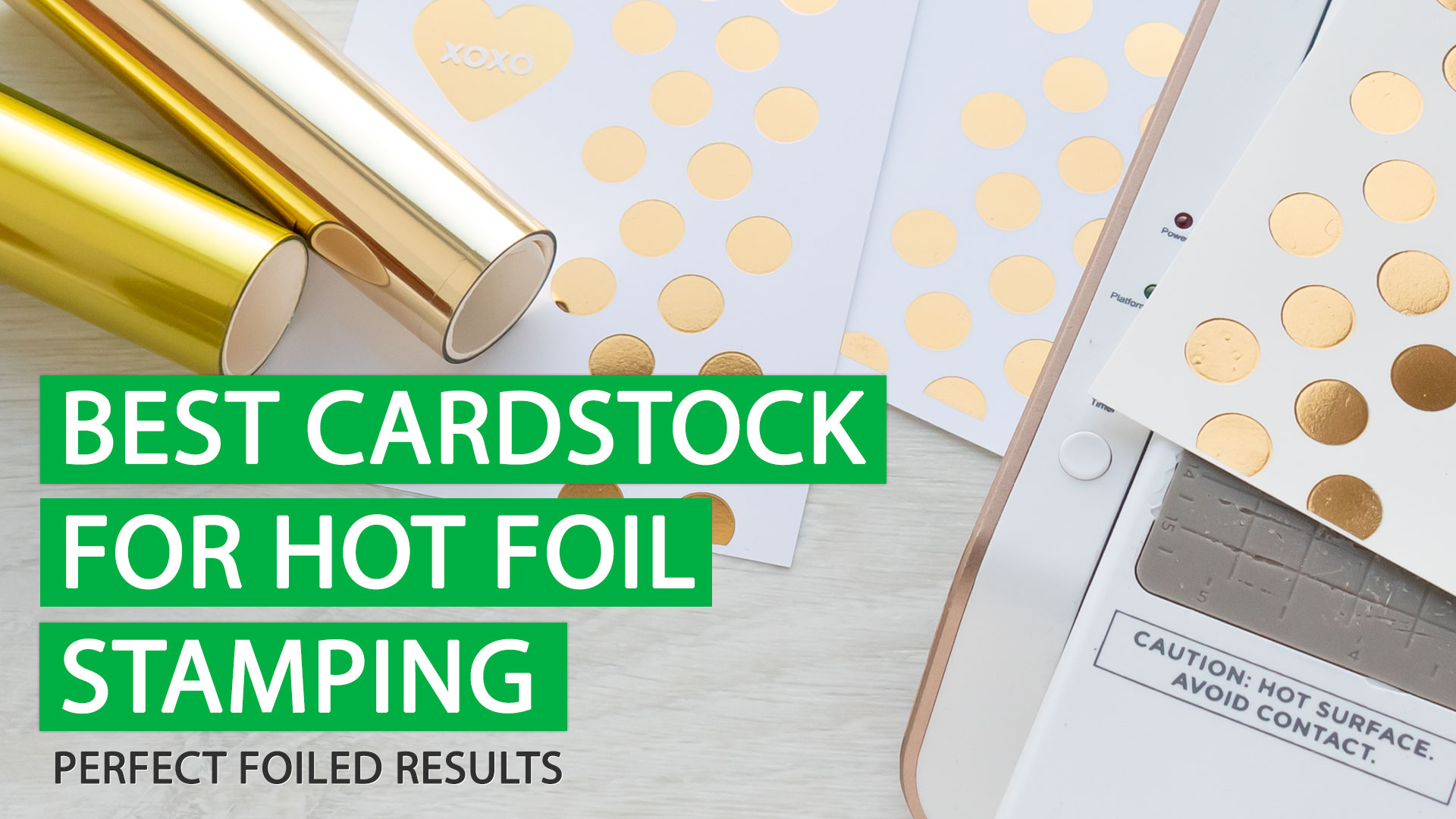

Successful hot foiling is not only about heat, pressure, timing, and the plate. The surface of the paper can make an enormous difference.

Why Paper Matters for Hot Foil Stamping
Different cardmaking techniques perform best on different surfaces. Watercolor paper is designed to handle water, alcohol-marker paper is formulated for marker blending, and specialty synthetic surfaces are commonly used with alcohol inks. Hot foil stamping also benefits from choosing a surface that suits the technique.
When I first started using the Spellbinders Glimmer Hot Foil System, I was told to foil on smooth, non-textured paper. That advice was useful, but my testing showed that smoothness alone does not tell the entire story. Some papers described as ultra smooth still produced incomplete coverage, while specialty papers created much cleaner results.
This is especially noticeable with plates that contain large solid areas. A delicate sentiment made from thin lines may foil reasonably well on a wider selection of cardstocks. A bold plate has more surface area that must transfer evenly, making imperfections easier to see.
Video Tutorial
Watch the video to see the individual tests and compare the foiled impressions on each paper. I used the same plate and foil color throughout the main comparison to keep the test as consistent as possible.
Watch the video below or on my YouTube channel.
Like this video? Please give it a thumbs up on the YouTube video page and share it with a crafty friend. Leave me a comment, too. I love hearing from you!
Hot Foil Cardstock Test Snapshot
| Test type | Comparison of cardstock and specialty-paper surfaces for hot foil stamping |
|---|---|
| Skill level | Advanced |
| Approximate time | 2 Hours |
| Hot foil system | Spellbinders Glimmer Hot Foil System |
| Main test plate | Spellbinders Polka Dot Strip Glimmer Hot Foil Plate |
| Additional test plates | Spellbinders Snarky Hearts Glimmer Hot Foil Plate and Die Set |
| Foil color | Polished Brass |
| Test variable | Paper type |
| Highest-rated papers | Yupo and glossy photo paper |
| Best traditional cardstock results | Simon Says Stamp 120 lb and 130 lb white cardstocks |
| Most difficult papers in this test | Neenah Solar White and Tonic Craft Perfect Ultra Smooth cardstock |
| Important note | These ratings reflect my results with the papers, plates, and setup used in this demonstration |
Hot Foil Paper Test Results at a Glance
| Paper | Rating | My test result | Best use |
|---|---|---|---|
| Neenah Solar White 80 lb and 110 lb | 2 out of 5 | Incomplete coverage with solid plates | Possibly thin-line sentiments |
| Yupo paper | 5 out of 5 | Very smooth, professional-looking coverage | Detailed or solid foil designs |
| Tonic Craft Perfect Ultra Smooth cardstock | 2 out of 5 | Similar results to Neenah in this test | Possibly small, thin-line sentiments |
| Simon Says Stamp White 120 lb cardstock | 4 out of 5 | Nearly perfect with minor imperfections | General hot foil stamping |
| Simon Says Stamp White 130 lb cardstock | 4 out of 5 | Excellent coverage with a deep impression | Hot foiling with a letterpress-like finish |
| Glossy photo paper | 5 out of 5 | Excellent coverage but requires extra precautions | Solid plates and exceptionally smooth foil |
What You’ll Need
Hot Foil System and Die-Cutting Machine
- Spellbinders Glimmer Hot Foil System – SSS | SC | SB | AMZ
- Spellbinders Platinum 6 Machine with Universal Plate System – SSS | SC | SB USA | SB UK | AMZ
Hot Foil Plates and Foil
- Spellbinders Polka Dot Strip Glimmer Hot Foil Plate – SSS | SC | SB | AMZ
- Spellbinders Snarky Hearts Glimmer Hot Foil Plate and Die Set – SB
- Spellbinders Glimmer Hot Foil Roll – Polished Brass – SSS | SC | SB | AMZ
Cardstock and Specialty Papers
- Yupo Paper – SSS | SC | TS
- ColorWay High Glossy Photo Paper – AMZ
- Simon Says Stamp White 120 lb Cardstock – SSS
- Simon Says Stamp Mega Thick White 130 lb Cardstock – SSS
- Neenah Solar White 80 lb Cardstock – SSS | AMZ
- Neenah Solar White 110 lb Cardstock – SSS | AMZ
- Tonic Craft Perfect Ultra Smooth Cardstock – SSS | TS
Additional Supplies
- Spellbinders Quick Trimmer – SSS | SC | SB | AMZ
- Spellbinders Quick Trimmer Replacement Blades – SSS | SC | SB | AMZ
- Standard printer paper for protecting coated photo paper
Affiliate disclosure: I use compensated affiliate links where available. If you make a purchase through one of these links, I may receive a small commission at no extra cost to you. Thank you so much for your support!
How I Tested the Papers
For the main comparison, I selected the Polka Dot Strip Glimmer Hot Foil Plate. This plate contains a substantial amount of solid surface area, making it more demanding than a delicate sentiment or fine-line design.
I also tested the Snarky Hearts Glimmer Hot Foil Plates. These designs also contain solid areas, so they provided another useful way to evaluate foil coverage.
I used the same foil color throughout the main test and changed the paper rather than the design. This allowed me to focus on how each surface accepted the foil. The ratings below reflect the results I achieved during this demonstration.
Neenah Solar White 80 lb and 110 lb Cardstock
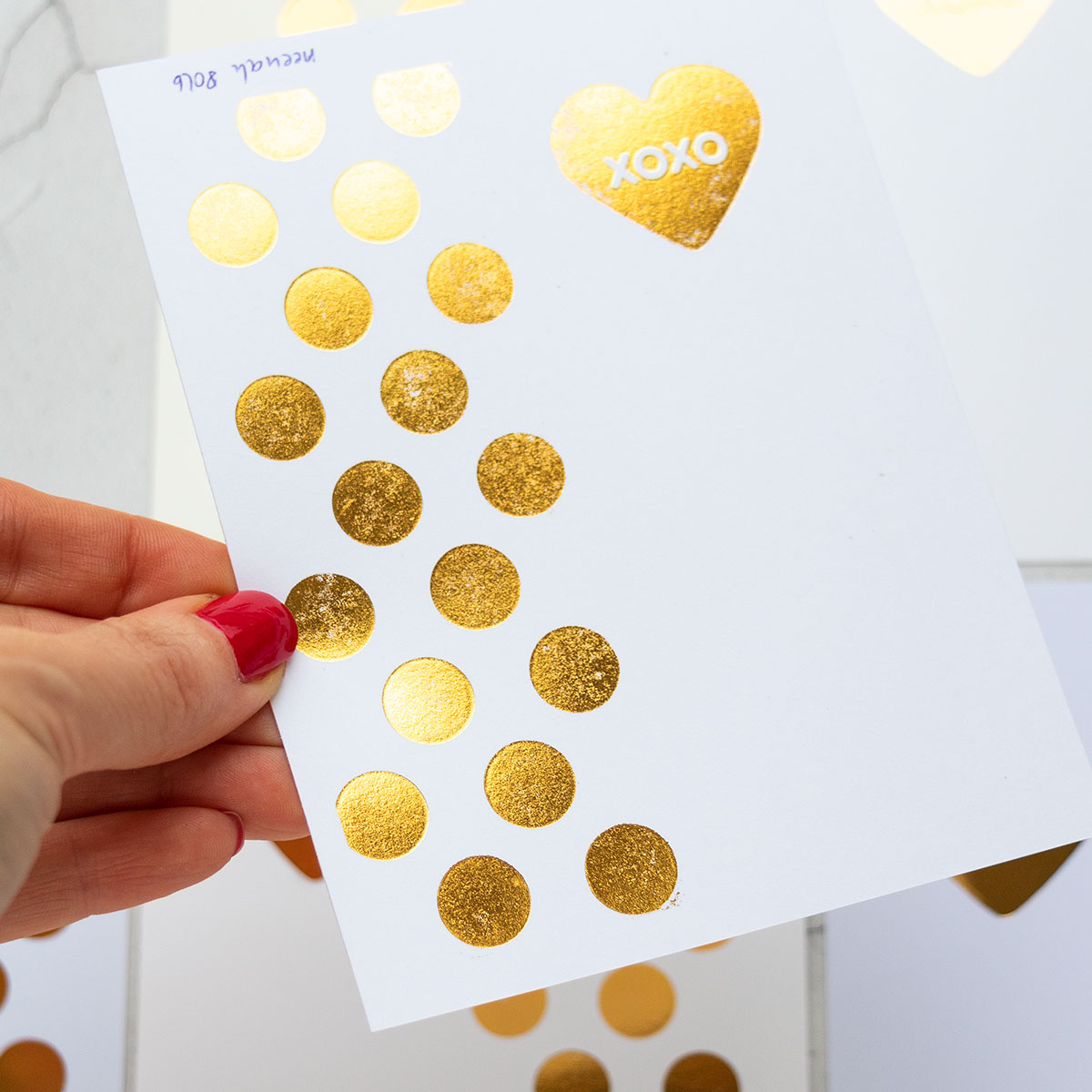
Neenah Solar White is a dependable everyday cardstock for stamping, coloring, card bases, and many other paper-crafting techniques. In this hot foil test, however, it produced my least-favorite results.
The solid areas did not transfer as evenly as they did on the highest-rated papers. Neenah may still be suitable when you want to foil a small sentiment made from thin lines, but it would not be my first choice for a plate with substantial solid areas. Even fine-line designs did not always foil consistently for me on this paper.
My rating: 2 out of 5.
Yupo Paper

Yupo produced one of the cleanest results in my comparison. The foil transferred smoothly across the solid areas, creating a finish that looked professionally produced.
If complete foil coverage is the main priority, Yupo is one of the best surfaces I tested. It is a specialty material rather than traditional cardstock, so it may behave differently when combined with other techniques. For the hot foil impression itself, however, the result was excellent.
My rating: 5 out of 5.
Tonic Craft Perfect Ultra Smooth Cardstock

The “ultra smooth” description made this cardstock a natural candidate for the test. Although its surface feels smooth, it did not perform as well as Yupo or the heavyweight Simon Says Stamp cardstocks in my demonstration.
The result was similar to what I achieved on Neenah Solar White. I would consider using it for a small, thin-line sentiment, but it would not be my first choice for a solid plate.
My rating: 2 out of 5.
Simon Says Stamp White 120 lb Cardstock

Simon Says Stamp White 120 lb cardstock, also known as Ultra Thick White, has a very smooth surface. It produced an almost perfect result in my test, with only minor imperfections.
This was a substantial improvement over the Neenah and Tonic cardstocks. It also has the familiar feel of traditional cardstock, which makes it convenient when you want to combine foiling with standard cardmaking techniques.
My rating: 4 out of 5.
Simon Says Stamp White 130 lb Cardstock

Simon Says Stamp White 130 lb cardstock, also called Mega Thick White, was the traditional cardstock I most often reached for when I wanted to hot foil. Its performance was close to Yupo, while still providing the structure and feel of heavyweight cardstock.
The thickness also created a deeper impression. The foil appeared pressed into the paper, producing a tactile, letterpress-like finish. Although I could still see minor imperfections, the overall result was excellent.
My rating: 4 out of 5.
Glossy Photo Paper
For the final portion of the comparison, I moved beyond traditional cardmaking papers and tested two ColorWay glossy photo papers. One was thinner, slightly translucent, and noticeably bluer than the Simon Says Stamp 130 lb cardstock. The second was thicker, less translucent, and not quite as blue.


Both glossy photo papers produced exceptionally smooth foil coverage. The result was similar to what I achieved on Yupo, but the coated surface required special handling.
Protect the Photo-Paper Coating
Place a sheet of ordinary printer paper between the photo paper and the Glimmer platform. In my test, the heat affected the photo-paper coating when this protective sheet was omitted, causing the paper to stick to the platform surface.
Avoid Tape on the Glossy Surface
I also found that low-tack tape could leave a dirty mark on the coated surface. The tape seemed to become embedded in or react with the coating, making it difficult to remove cleanly.
Glossy photo paper also behaves differently from standard cardstock when stamped or ink blended. Keep those limitations in mind if the foiled piece will be combined with additional techniques.
For foil coverage alone, however, the photo paper performed beautifully.
My rating: 5 out of 5.
What Did This Hot Foil Paper Test Show?
The test showed that a paper described as smooth does not automatically produce perfect hot foil coverage. Yupo and glossy photo paper created the cleanest results in this comparison, while the Simon Says Stamp 120 lb and 130 lb cardstocks performed very well among the traditional cardstocks.
Neenah Solar White and Tonic Craft Perfect Ultra Smooth cardstock remain useful for many other cardmaking techniques, but they did not provide the same solid foil coverage with the demanding plates used in this demonstration.
The type of plate also matters. A delicate line-art design or small sentiment does not demand the same continuous transfer as a plate with large solid areas. Before discarding a paper completely, test it with the type of plate you plan to use.
Tips for Better Hot Foil Coverage
- Test the paper before beginning the final project. Use a small off-cut or create a sample chart for the papers in your stash.
- Match the paper to the plate. A cardstock that struggles with a solid plate may still work for a delicate sentiment.
- Use one variable at a time when testing. Keep the foil, plate, heat, and sandwich consistent while comparing papers.
- Look beyond visible texture. Two papers may both feel smooth but produce very different foil coverage.
- Try heavyweight cardstock for a deeper impression. The 130 lb cardstock produced a noticeable letterpress-like effect in my test.
- Protect coated photo paper. Add printer paper between the photo paper and the hot platform so the coating does not contact the heated surface directly.
- Avoid taping directly to glossy photo paper. Even low-tack tape left marks on the surface I tested.
- Save successful samples. Label each one with the paper, foil, plate, and machine setup for future reference.
- Evaluate the complete design. A tiny imperfection that looks obvious on a test strip may be less noticeable once the piece becomes part of a finished card.
Ways to Use Your Hot Foil Test Pieces
Paper comparisons do not have to end in the trash. Even samples with imperfect coverage can become useful cardmaking elements.
- Trim the best section of a test panel and use it as a narrow accent strip.
- Die cut small shapes from foiled samples to avoid visibly incomplete areas.
- Use the Polka Dot Strip panels as backgrounds for sentiments.
- Turn the Snarky Hearts samples into Valentine’s Day or friendship-card embellishments.
- Layer a sentiment over a slightly imperfect section of foil.
- Save one labeled sample of each paper as a permanent reference chart.
- Use the remaining pieces to compare stamping, ink blending, or die cutting on the same surfaces.
Frequently Asked Questions
What is the best cardstock for hot foil stamping?
Among the traditional cardstocks included in my test, Simon Says Stamp White 120 lb and 130 lb cardstocks produced the best results. Yupo and glossy photo paper achieved even smoother foil coverage, but they are specialty surfaces and behave differently from standard cardstock.
Why is my hot foil stamping patchy?
The paper may not be accepting the foil evenly, especially when the plate contains large solid areas. Test the same plate on another paper before changing multiple parts of your machine setup.
Can I hot foil on Neenah Solar White cardstock?
You can hot foil on it, but it produced incomplete coverage with the solid plates used in this demonstration. It may be more suitable for small sentiments or fine-line designs than for large solid images.
Can I hot foil on Yupo paper?
Yes. Yupo produced one of the cleanest and smoothest impressions in my test, earning a rating of 5 out of 5.
Can I hot foil on glossy photo paper?
Yes, and the glossy photo papers I tested produced excellent foil coverage. Add a sheet of printer paper to protect the coated surface from the heated platform, and avoid placing tape directly on the glossy side.
Does heavier cardstock foil better?
The heavyweight Simon Says Stamp cardstocks performed well in this comparison, but weight was not the only factor. The surface and composition of the paper also affected the result. The smooth 130 lb cardstock produced excellent coverage and a deeper impression.
Do solid hot foil plates require different paper?
Solid plates make incomplete coverage easier to see because more foil must transfer continuously. A paper that works adequately for thin lines may not provide the same result with a large solid design.
More Hot Foil Cardmaking Ideas
If you would like to continue experimenting with hot foil stamping, these tutorials cover the complete foiling process, troubleshooting tips, specialty surfaces, colored cardstock, and additional ways to use your Glimmer plates:
- Hot Foil Stamping 101 – Tips, Do’s and Don’ts
- 7 Hot Foil Stamping Tips and Tricks
- How to Hot Foil on Colored Cardstock
- Card Ideas with the Polka Dot Strip and Foiled Basics Collection
- Best Cardstock and Acetate for Hot Foil Stamping
Final Thoughts
If your hot foil results are patchy, do not immediately assume your technique is the problem. Try the same plate and foil on a different paper. In this comparison, Yupo and glossy photo paper produced the smoothest coverage, while Simon Says Stamp 120 lb and 130 lb cardstocks offered the best balance of traditional cardstock feel and strong foil results. A small paper test can save time, foil, and frustration before you begin the finished card. Have fun foiling!


Great comparison thanks Yana – I’d been disheartened with the results I was getting with Neenah and thought it was just me. I’d be interested to see the effects on strathmore Bristol smooth and Brutus Munroe not your mamas cardstock.
This was so helpful and super informative on the different papers. So often, we wonder what happened when our foiling isn’t a success. Now I know it is the paper and will try your tips. Thank you.
In addition to knowing more about colored stock I’d like to see Accent Opaque White 8.5” x 11” Cardstock Paper, 100lb, 271gsm since many folks are using it. Thanks
You probably already know since this is quite old but I have used the accent opaque and was not pleased with the results. If you’re looking for a distressed look than look no further.
Very helpful. What is the best color card stock papers to foil on???
Thank you so very much for this video. I’m going to try out your recommendations❤️
Very interesting! Another, “duh” moment, right? Paper matters!
How does the Spellbinders colored card stock compare to other 80# paper?
What about the Brutus Monroe “Not Your Mama’s Paper” and Bristol Smooth?
I will definitely keep this in mind when using any of the “more solid” hot foil plates.
Thank you!!
Thank you so much. I never thought to try different paper. Fantastic video.
A fantastic, detailed and extremely informative video containing Information/comparisons that I have not seen before. Thank you for sharing this information! I would be interested to know about vellum brands and other information you have discovered since doing your earlier videos on hot foiling.
How does the Spellbinders new Glimmer Paper foil???
Eye opener video, Yana. I need to remember to try different media if my results are not what I want and experiment to see what might work better. I really enjoyed your video, and am looking forward to your next installment. Thank you so much for taking the time to pull all this together. This one’s a 5!!
I’m curious if alcohol ink card stock or glossy card stock would work. I think they’re very similar.
I checked SSS and there were different Yupo papers! Which one to get?
I’m just starting out with hot foiling. Although I’ve been a card maker for years, I’ve never hit foiled. I am anxiously waiting for my machine. I use Stampin up white Cardstock for card making. Will I have good results with that?